Free written estimates
Bathroom RemodelingWaterproofed behind the tile
Bathroom remodeling with moisture-smart design and refined finishes.
What you get
Bathrooms demand moisture-aware construction. We remodel with waterproofing, tile work, fixtures, and finishes that look exceptional and stand up to daily use.
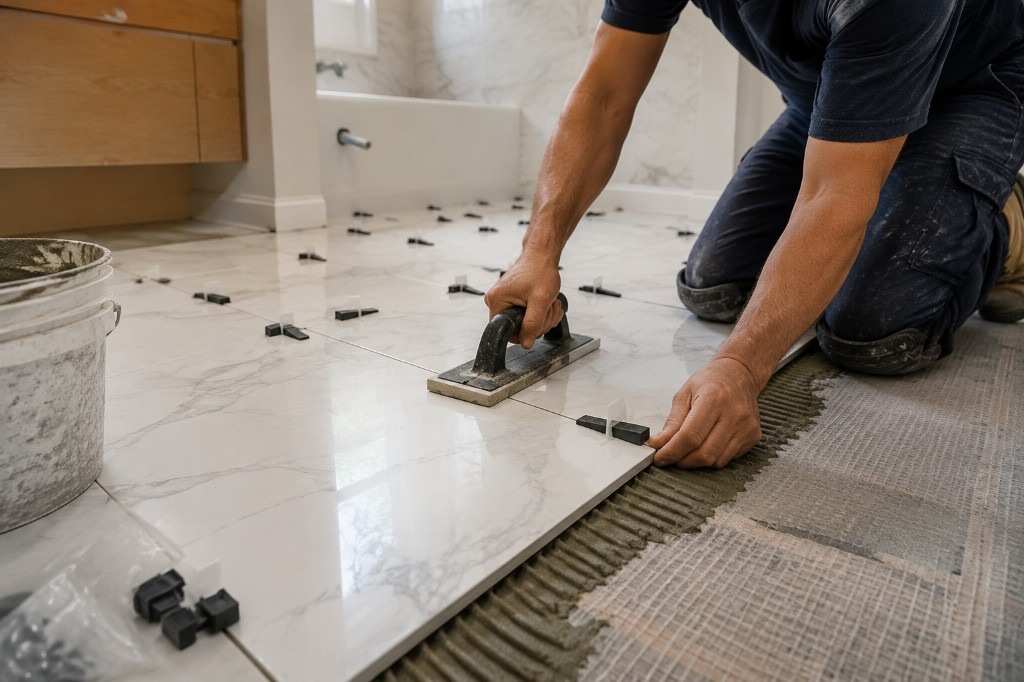
Tile and waterproofing
Fixture upgrades
Layout improvements
Moisture-smart rebuilds
What you do not see
A good shower is built in layers behind the tile.
Most bathroom failures are not about the tile you can see. They start in the layers behind it, where water finds a way in. Tap each layer on the drawing to see what it does, and why shortcuts here lead to leaks, mold, and rot later.
Tile and grout
The finish you see. It sheds most water but is not a waterproof barrier by itself.
Grout is porous and can crack. Water gets through tile joints over time, which is why the layers behind matter so much.
Shower and tub choices
Pick the style that fits your room and your life.
| Style | Best for | Good to know |
|---|---|---|
| Tub with shower | Families, small bathrooms, bathing kids | A familiar and efficient use of space, with a surround that has to be well sealed |
| Walk-in shower | Adults, easy access, a cleaner open look | Needs a well-built waterproof base and a place to keep splash in |
| Curbless shower | Accessibility and a seamless floor | The floor under the bathroom may have to be lowered to keep the slope |
| Soaking tub | Primary bathrooms with room to spare | Heavy when full, so the floor structure may need checking |
| Shower over a corner tub | A compromise in a mid-sized bathroom | Check the room for door swing and clearances before choosing |
Tile
Different tiles behave differently in wet rooms.
Very dense
Porcelain tile
Dense and low in water absorption, which suits showers and floors. It is hard, so cutting takes proper tools.
Our default for showers and floors where durability matters most.
What to expect
- Very durable and water resistant
- Many looks, including stone and wood
- Needs proper cutting tools
Moisture control
What keeps a bathroom dry for the long run.
A beautiful remodel can still fail if humidity is not controlled. These are the details that matter most, shown with more filled dots for a bigger effect.
- A real waterproofing membraneThe single most important layer in a shower. Skipping it or doing it poorly leads to leaks inside the wall.
- Correct slope to the drainWater should never stand on the shower floor. Slope is set before the membrane and tile go on.
- An exhaust fan that vents outsideA fan sized for the room, venting outdoors, removes steam. A fan that vents into the attic just moves the problem.
- Sealed corners and jointsFlexible caulk, not grout, belongs in corners and where different surfaces meet, because those joints move.
- Good plumbing connectionsFixtures and valves must be properly connected and tested before walls are closed.
- A fan timer or humidity sensorRunning the fan after a shower keeps moisture from settling on walls and ceilings.
Planning a bathroom remodel?
Tell us what is not working and we will visit and write a plan.
How it goes
The sequence of a bathroom remodel.
Step 1
Demolition
Old fixtures, tile, and flooring come out. We check the framing and subfloor for damage or rot.
Step 2
Rough plumbing and electrical
Supply lines, drains, and wiring are moved or replaced, and valves and drains are set at the correct heights.
Step 3
Backer board and waterproofing
Backer board goes up, seams are sealed, and the membrane is applied across the walls and floor of the wet area.
Step 4
Flood test
When the membrane is complete, the shower floor can be filled with water to confirm that it holds before tile covers it.
Step 5
Tile and grout
Tile is set, grouted, and sealed where needed, with caulk in the corners.
Step 6
Fixtures and finishing
Vanity, toilet, faucets, glass, lighting, and accessories are installed, followed by a final check.
Plan for the long term
Small choices that make a bathroom easier for years.
- Blocking for grab bars
Solid backing inside the walls costs little now and lets grab bars be added later without opening walls.
- A low or no-curb shower entry
Easier on the knees and kinder to a walker or wheelchair, if the floor structure allows it.
- Comfort-height fixtures
A slightly taller toilet and counter can make the room more comfortable for many adults.
- Good lighting
Layered light, including a bright spot over the shower, helps visibility and safety.
- Slip-resistant surfaces
Textured tile or smaller tiles with more grout lines give better grip on shower floors.
- Wider doorways
A wider door makes the room easier to enter with a walker or help from another person.
Common beliefs
Bathroom ideas that cost people later.
Repair or remodel
Do you need a full remodel, or just a repair?
Four quick questions
1.What is the main problem?
2.Is the floor or wall soft near the tub or shower?
3.Do you see mold or smell mustiness?
4.Do you want to change the layout?
Your result
Answer all 4 questions
Pick one option for each question on the left and the result shows here.
Bathroom words
Terms you may hear in a bathroom project.
- Curb
- The raised edge at the front of a shower that holds water in. A curbless shower has none.
- Shower pan
- The base of the shower, either a pre-formed unit or one built on site, that collects water and sends it to the drain.
- Membrane
- The waterproof layer, either a sheet or a coating, that keeps water out of the wall and floor.
- Backer board
- A moisture-resistant panel that tile is set on, instead of ordinary drywall.
- Niche
- A recessed shelf built into the shower wall, which has to be waterproofed like the rest.
- Rough-in
- The stage when pipes and wires are installed in the walls before they are closed.
- Flood test
- Filling the shower floor with water to confirm the waterproofing holds before tile goes on.
- Vanity
- The cabinet and sink combination, usually the main storage in a bathroom.
Before we start
Decide these before demolition.
Settle the details on paper
Bathrooms are small, so every choice is visible. Most of these affect work inside the walls.
- Shower or tub, and the sizeThis decides plumbing positions and the amount of waterproofing.
- Fixtures and valvesExact models decide rough-in depths. Choosing late can mean reopening walls.
- Tile and layoutSize, pattern, and where cuts fall affect the look and the cost of labor.
- Ventilation and lightingA fan that vents outside, and lights for the vanity and shower.
- A plan for the week or two aheadWhere you will shower, and how to keep dust out of the rest of the house.
Cosmetic wear, such as worn caulk, dated tile, or tired fixtures, can often be refreshed. Soft floors, leaks, persistent musty smell, or mold usually mean water is getting into the structure, and that needs to be opened up and repaired properly.
Tile and grout are not watertight, so a waterproof layer behind them protects the wall and floor. Failures often go unnoticed for a long time and cause rot and mold, which are expensive to fix.
Once the waterproofing is in place, the shower floor can be filled with water and left for a while to see whether the level drops. It confirms the membrane holds before any tile covers it.
Usually, yes. We check the room, the floor structure, and the drain position, and we build a waterproof, properly sloped base. Some conversions need minor floor work to get the slope right.
That depends on the scope and on material lead times. We give you a written schedule and suggest a plan for showering elsewhere while the work is underway.
Often when the work involves plumbing, electrical, or changes to the layout. Requirements vary by county and town. We tell you what applies and handle it with the project.
Porcelain is a popular choice because it is dense and absorbs little water. The right tile also depends on style, grip, and how easy you want it to be to clean. We help you compare samples in your light.
Often, yes. A fan that is too small, too old, or vents into the attic does not remove moisture. We install one sized for the room, venting outside, and suggest a timer or humidity control.
Yes. Options include a low or no-curb shower, backing in the walls for grab bars, comfort-height fixtures, slip-resistant tile, and wider doorways, depending on your room and needs.
We stop, show you, and explain the options. Damaged framing or subfloor is repaired, and mold is handled with proper containment before rebuilding. Extra work is agreed in writing first. See our guide to mold remediation.
Run the fan during and after showers, wipe down walls, and keep caulk in good shape. Reseal grout and stone as recommended, and fix small leaks right away.
Yes. We coordinate plumbing, electrical, waterproofing, tile, and finishes under one schedule, so there is one point of contact and no gaps between trades.

Who is behind this page
ABC Experts LLC
Water, fire, and mold restoration plus remodeling for Charlotte-area homes and businesses, from emergency cleanup to the finished repair.
We answer calls 24 hours a day.
Request bathroom remodeling
Fill in the form and we will get back to you.
Emergency? Call, 24/7(980) 282-9637- Free estimates
- Fast response, day and night
- Insurance-friendly documentation
Also from ABC Experts