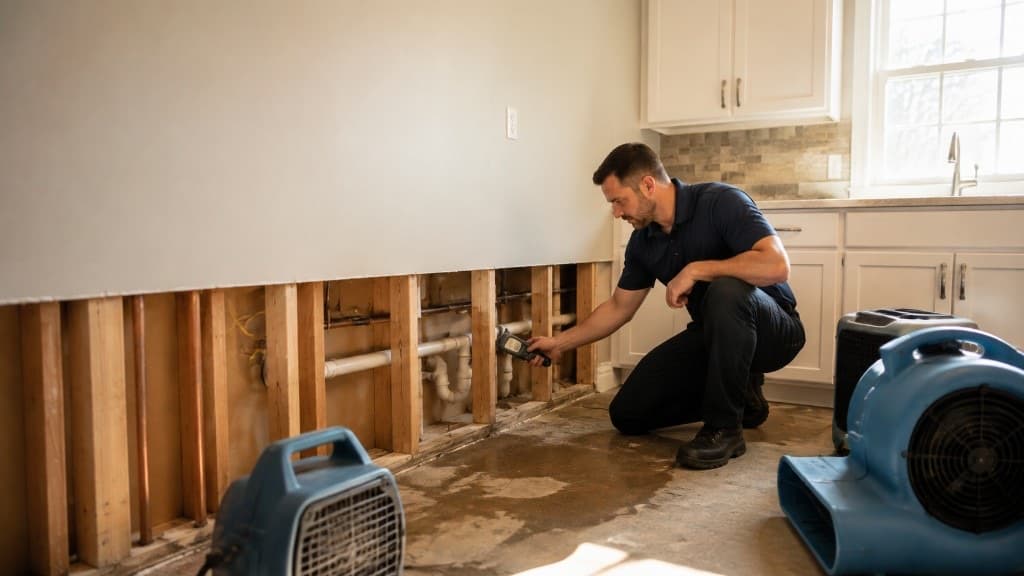
From century-old homes near Union Street to new subdivisions off Poplar Tent Road, we handle water extraction, structural drying, and repairs across Concord, and the same crew can rebuild what the water damaged.
Concord has a historic core and a lot of new construction.
Cabarrus County has grown quickly, so a single street in Concord can hold a 1920s house and a home built last year. They get wet in different ways. Pick the kind of place closest to yours.
Historic homes
Historic downtown Concord and the streets around it
Houses near downtown were built long before modern plumbing and many still have original supply lines, cast iron drains, and crawl spaces. Leaks tend to be slow and hidden, and the first sign is often a stain, a soft floor, or a musty smell.
We trace moisture to its source and protect original floors and trim wherever they can be saved.
What we often see
Corroded supply and drain lines inside plaster or old drywall
Damp crawl spaces under heart-pine floors
Old roof valleys and chimney flashing that leak in storms
Newer builds
Subdivisions off Poplar Tent Road and across the county
Newer Concord homes are large, with upstairs laundry and bathrooms over finished rooms. A failed hose or water heater can soak a ceiling, a wall cavity, and the floor below in one event.
We dry every level the water reached and check the rooms underneath the leak, not only the one where it started.
What we often see
Upstairs washer hoses and supply lines
Water heaters in garages and closets
HVAC condensate lines in attics and closets
Apartments, hotels, retail
The Concord Mills area and other multi-unit property
Apartments, townhomes, hotels, and retail space around the Concord Mills corridor share walls, ceilings, and mechanical systems. When something fails, water travels, and management has to be part of the response.
We document each affected space and coordinate with property managers so the work is clear to everyone involved.
What we often see
Sprinkler, supply line, and water heater failures
Leaks that pass through ceilings into the unit below
Roof drains and flat roofs that back up in heavy rain
Rural and larger lots
Larger lots and homes toward the county line
Outside the center, properties are more spread out, with longer driveways, detached garages, and sometimes well water. Heavy rain and runoff drive many calls here, along with failed sump pumps and wet crawl spaces.
We find where water enters, pump it out, and dry the structure so it does not turn into a mold problem.
What we often see
Runoff pooling against foundations and garage slabs
Sump pump failures during long rain
Well and pressure tank leaks
Older house or new
Think the leak is small? Start here.
In Concord, the first hour often decides whether a repair stays small. These are the moves that help.
Do
Shut off the main water valve if you cannot find the source quickly.
Turn off power to wet areas if you can do it safely from a dry spot.
Photograph and film the damage before anything is moved.
Check below and beside the leak, including ceilings and crawl spaces.
Call us early and describe what you see.
Don't
Don't walk into standing water near outlets or an electrical panel.
Don't throw out wet materials until they are documented.
Don't wait to see if it dries on its own.
Don't use a household vacuum on standing water.
What we are called for
The leaks we see most often around Concord.
Washer hose or supply line failure
A burst hose behind an upstairs washer soaks floors and ceilings below.
Water heater leak
A tank splits in a garage or closet and spreads into nearby rooms.
HVAC condensate overflow
A clogged line spills into an attic or closet during long humid stretches.
Storm water at garages and doors
Heavy rain finds its way in under thresholds and around window seals.
Aging pipes in older homes
Original lines near downtown corrode and leak inside walls.
Roof leaks after a storm
Wind and hail lift shingles, and water follows nails into the ceiling.
Concord weather
Why Concord buildings get wet.
Storm season
Afternoon thunderstorms in warm months drop heavy rain quickly and test roofs and window seals.
Remnants of hurricanes can bring several days of rain to Cabarrus County in late summer and fall.
Piedmont clay soil drains slowly, so water lingers against foundations and in crawl spaces.
Homes near Rocky River, Coddle Creek, and their tributaries should check whether they sit in a flood zone.
Cold and humid months
Hard overnight freezes can split pipes in attics, garages, and exterior walls.
Muggy summers keep air conditioners running, and condensate lines clog.
Humid air slows drying, which is why structures are dried with equipment and measured.
Aging water heaters and appliances fail at any time of year.
Yes. We work across Concord, including Historic Downtown Concord, Union Street, Concord Mills area, Poplar Tent Road, Concord Parkway, and Speedway area. Call us for current availability for your address.
Yes. We work across Concord, including the Concord Mills area, the Speedway side of town, and neighborhoods along Concord Parkway and Poplar Tent Road. Call us for current availability for your address.
It can be. Older houses often have original plumbing, plaster, crawl spaces, and old finishes. We trace moisture to the source, dry the structure carefully, and try to save original flooring and trim where it is practical.
Yes. We document each affected unit, dry the structure, and coordinate with the property manager or owner. A written scope of work helps when several units or insurers are involved.
Stay out if water is near wiring, and call us. Standing water needs to be pumped out and the space dried, because crawl spaces hold moisture and can develop mold if they stay damp.
Often, yes. We serve Concord and the communities around it, including Kannapolis, Harrisburg, and parts of northeast Mecklenburg County. Call with your address and we will confirm.
Often, but not always. Coverage turns on the cause of the loss and the wording of your policy, so call your insurer early. We keep clear records of the damage and the work to support your claim.
Possibly. A ceiling stain proves water reached that spot, not that water is still arriving. We can check with a meter and tell you what we find.
Yes. We replace drywall, flooring, trim, and paint ourselves, so you do not need to hire a second contractor.
Yes. Our phone is answered around the clock, including nights, weekends, and holidays.
Water damage, fire damage, and mold restoration, plus remodeling, for homes and businesses across the Charlotte metro. One team from emergency cleanup to the finished repair.