From pier-and-beam houses near Union Street to tight new builds off Poplar Tent Road, Concord homes trap moisture in very different places. We find where it is coming from, remove the mold it fed, and repair what was damaged.
Cabarrus County mixes an older housing stock with fast-built newer homes, and mold turns up in different spots in each. Choose the description closest to your property.
Historic homes
Century-old houses near downtown Concord
Pier-and-beam houses sit on crawl spaces that were designed to breathe. When vents get blocked, gutters spill beside the foundation, or old ducts sweat, the space turns damp and the floors above start to smell musty.
We dry the structure, remove contaminated material, and discuss moisture control that suits an older home.
Where it shows up
Crawl spaces with wet soil and sagging insulation
Porch roofs and old flashing that leak
Old plumbing that sweats or drips slowly
Newer houses
Subdivisions off Poplar Tent Road and Concord Parkway
Newer houses are tightly sealed and rely on mechanical ventilation to move moist air out. Bathrooms, laundry rooms, and attics are where mold shows up when exhaust fans or ducts do not do their job.
We find the path the moisture takes, remove affected material, and suggest ventilation fixes.
Where it shows up
Bathroom fans that vent into the attic
Condensation on air-handler closets and ducts
Window leaks hidden behind new drywall
Apartments and hotels
Multi-unit and commercial space near Concord Mills
Apartments, hotels, and retail rely on shared systems. A clogged condensate line or a leak in one place can feed mold across several rooms, and managers need clear records for owners and insurers.
We document each affected space, contain the work tightly, and coordinate with managers and owners.
Where it shows up
Hotel rooms with failed air-conditioner drains
Leaks from units above
Roof drains that back up in heavy rain
Larger lots
Homes on larger lots toward the county line
Farther out, houses may have basements, wells, and landscaped slopes that send water toward the foundation. Heavy rain finds low spots, and an overworked sump pump can fail at the worst moment.
We dry the structure, clean the growth, and discuss ways to keep water away from the foundation.
Where it shows up
Basement seepage after long rain
Well pressure tank leaks
Sump pumps that stop working
What we are called for
Where mold shows up around Concord.
Crawl spaces
Wet soil and blocked vents keep the air under the house damp all year round.
Air-handler condensation
A closet or attic unit drips onto framing and insulation for weeks before it is noticed.
Pipe and fixture leaks
Small leaks behind walls stay wet for months and feed growth you cannot see.
Storm intrusion
Rain pushes past flashing and window seals and wets insulation and drywall.
Bathrooms
Poor exhaust leaves ceilings and grout lines damp and spotted with growth.
Old water damage
Areas that were never fully dried after a leak can bloom with mold weeks later.
A quiet problem
What to do when you suspect mold in Concord.
The best early steps are the ones that do not disturb it, so spores stay where they are until it is properly contained.
Do
Fix or stop any drip you can safely reach, and mop up standing water.
Use a dehumidifier in the affected room with the door closed.
Take dated photos of the growth and any stains around it.
Note where the musty smell is strongest and when it began.
Call us for an inspection before any major cleaning.
Don't
Don't wipe or spray it without protection; that spreads spores.
Don't aim a box fan at the area, which blows spores around.
Don't cover it with paint or caulk; growth continues underneath.
Don't tear out drywall without containment in place.
Why it matters here
Conditions in Cabarrus County.
Weather and soil
Summers are warm and humid, with frequent heavy storms.
Piedmont clay drains slowly and holds water near foundations.
Stream-side lots can have high water tables after long rain.
Mild winters let mold stay active all year long.
Housing
Historic houses sit on crawl spaces with limited airflow.
Newer houses are tightly sealed and depend on exhaust fans.
Hotels and apartments rely on condensate lines that clog.
Rural properties often have wells, sump pumps, and basements.
Yes. We work across Concord, including Historic Downtown Concord, Union Street, Concord Mills area, Poplar Tent Road, Concord Parkway, and Speedway area. Call us for current availability for your address.
Yes. Air moves from crawl spaces up into living areas, carrying odors and spores with it. Cleaning and drying the crawl space often improves indoor air noticeably.
Yes. We document each affected space, contain the work, and coordinate with managers and owners so guests and residents are disturbed as little as possible.
Often the exhaust fan is weak, blocked, or venting into the attic instead of outside. We check the fan and duct as part of the inspection.
Often, yes. We serve Concord and the communities around it. Call with your address and we will confirm.
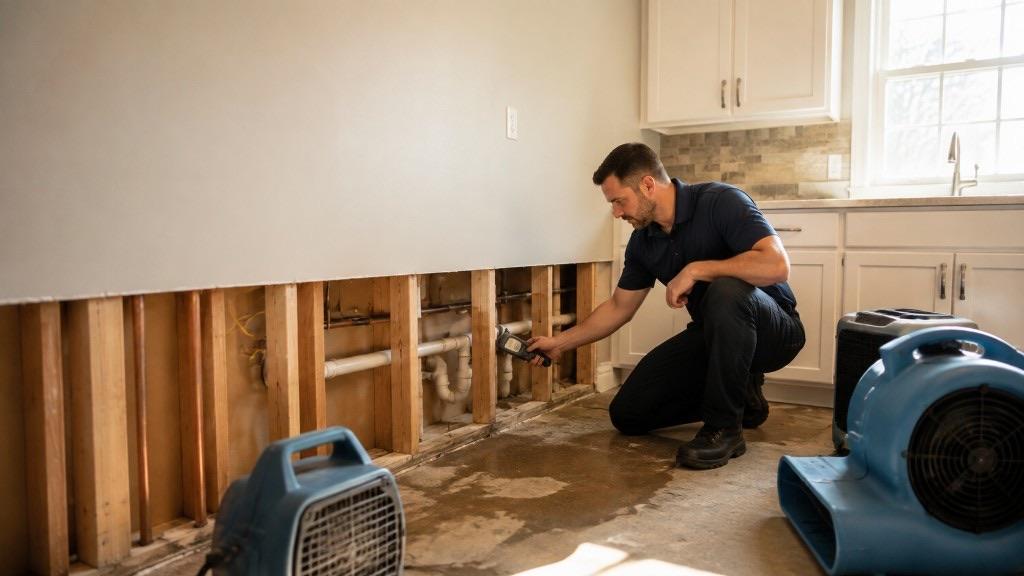
We measure moisture content in framing and subfloors before closing anything up, and we share the readings with you.
For many people it causes sneezing and congestion; for some, it is more serious. Either way, mold should not be left to grow.
It rarely works. Surface cleaning leaves growth inside materials, and mold returns if the damp conditions remain.
We inspect, find moisture, and recommend a plan. Where testing helps, such as for a clearance requirement, we can coordinate with an independent tester.
Return is usually a sign that the moisture was not solved. We focus on the cause and give you steps to keep the area dry.