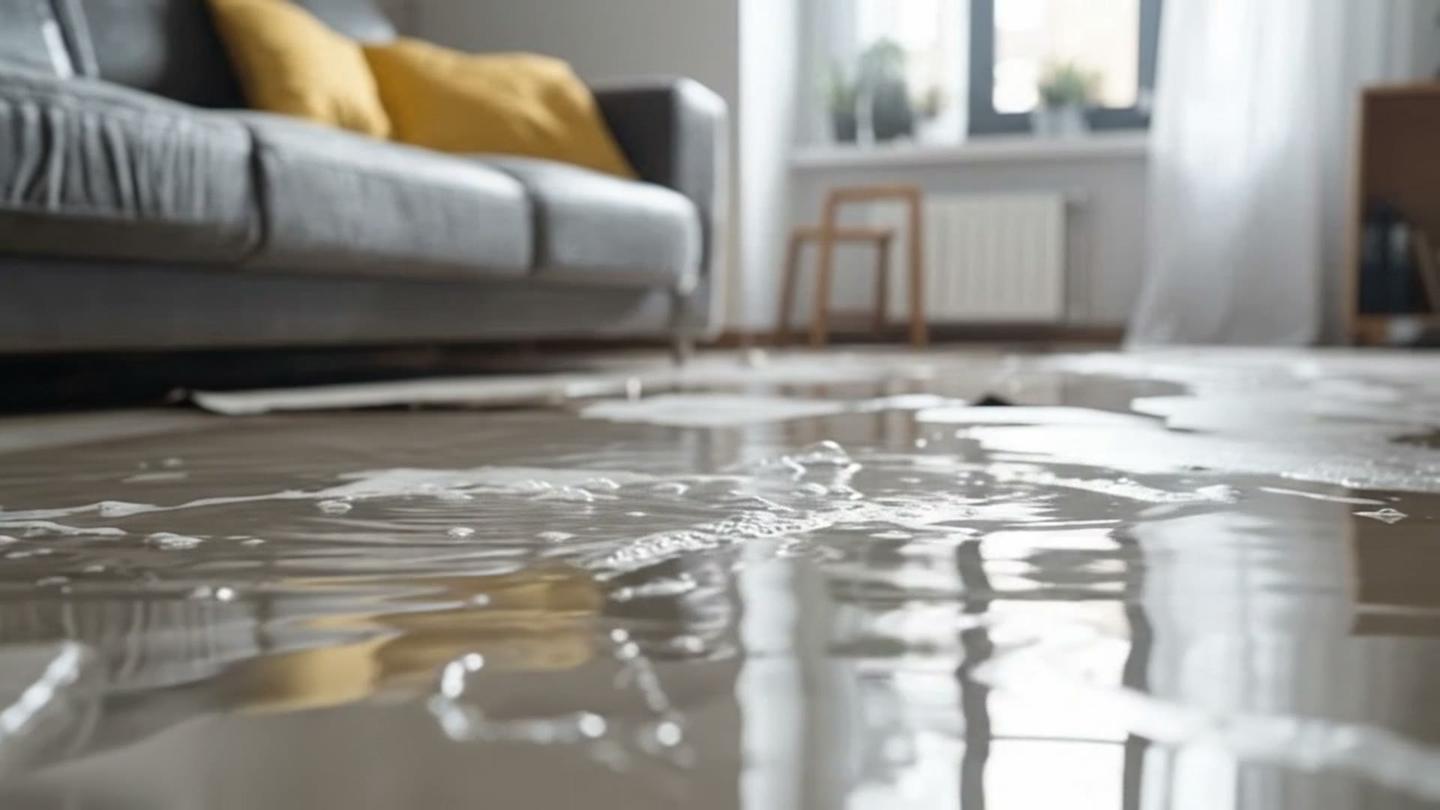
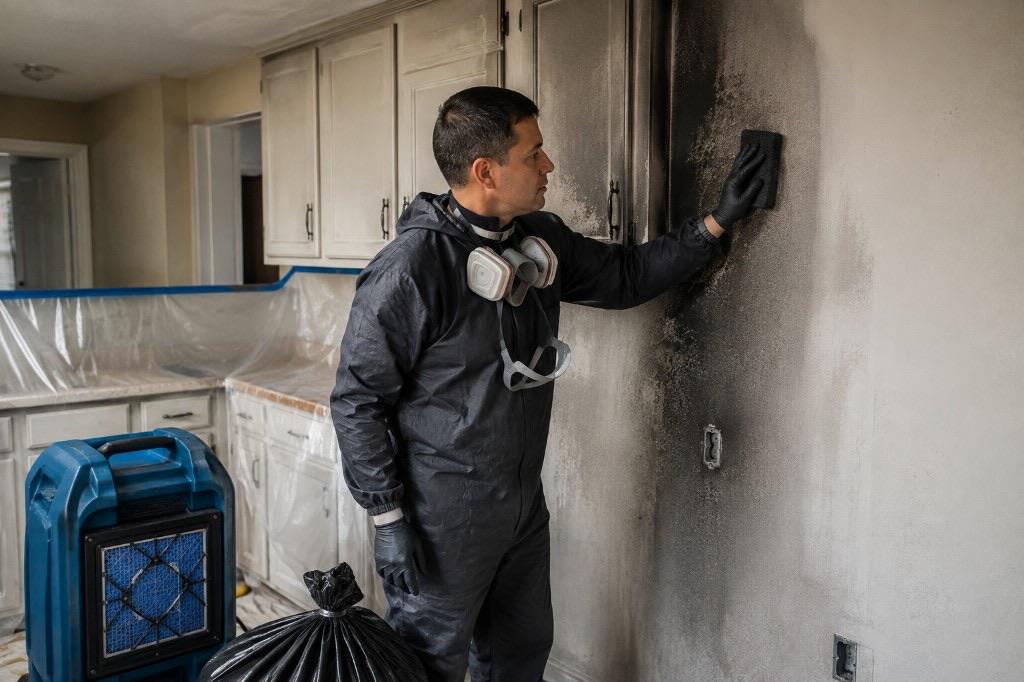
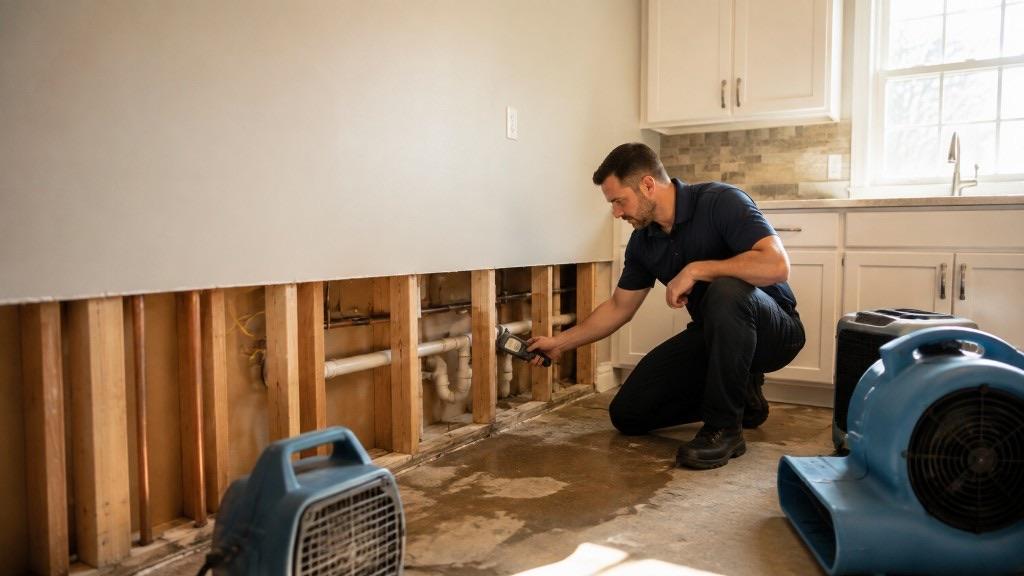
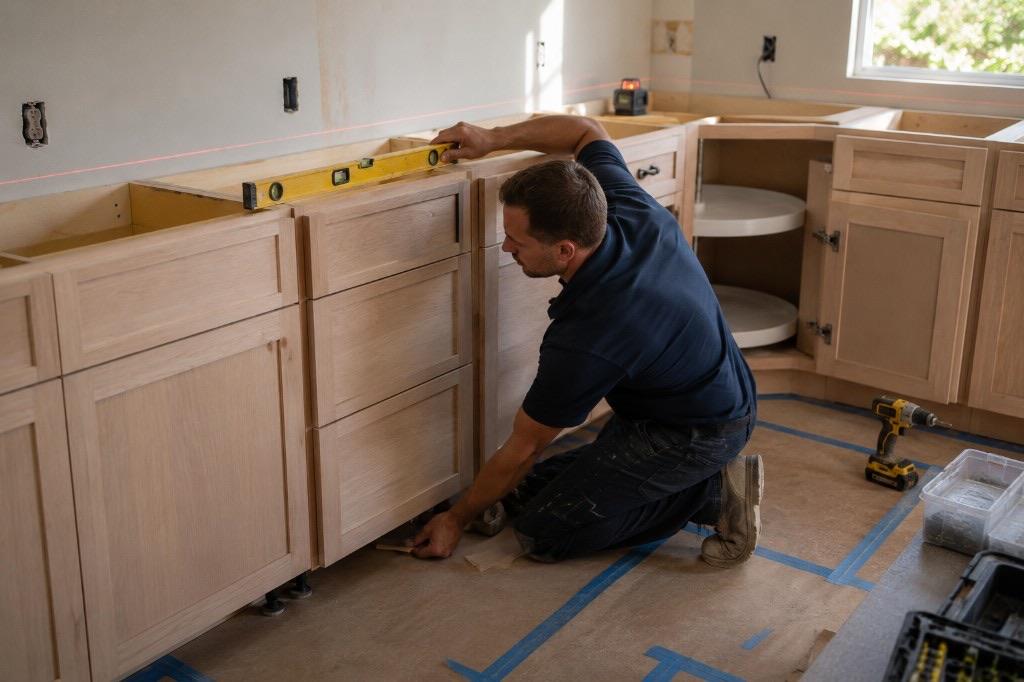
Mature trees shade many Matthews roofs and walls, so they dry slowly after every storm. That, plus aging crawl spaces and tightly built townhomes, is where we most often find mold, along with the leak or condensation that fed it.
A cottage near the town center, a brick ranch off Sardis Road, a townhome by Windsor Square, and a shop on Independence Boulevard all hold moisture differently. Pick the one closest to yours.
Historic cottages
Cottages and storefronts near the town center
Older houses sit low over crawl spaces with limited airflow, shaded by trees that keep roofs and soil damp. Moisture rises through the floor, porch roofs leak into walls, and old windows let rain in behind curtains where nobody sees it.
We dry the structure, clean framing worth saving, and replace what cannot be saved, with notes on drainage and ventilation.
Where it shows up
Crawl spaces with damp, shaded soil
Porch roofs that drain into the wall
Old window sills that rot and leak
Established neighborhoods
Brick ranches and two-story homes off Sardis Road
Houses from the 1980s onward have long duct runs through attics and crawl spaces, and the ducts sweat when humid air meets cold metal. Bathroom fans that have quit working and windows with failing seals do the rest.
We follow the moisture path, take out affected drywall and insulation, and recommend duct, fan, and window fixes.
Where it shows up
Insulated ducts whose wrap has torn or slipped
Bathroom fans that have burned out or vent into the attic
Window seals that let rain in behind blinds
Condos and townhomes
Townhomes and condos near Windsor Square
Shared roofs and walls mean a leak next door can wet your wall without any mark on your side until growth appears. Owners, neighbors, and associations all need clear answers about where the water came from.
We document your home separately, trace the source, and share records with the people who need them.
Where it shows up
Roof leaks that travel along shared framing
Appliance leaks in the unit next door
Balcony and window leaks into party walls
Shops and offices
Retail and offices along Independence Boulevard
Strip centers have flat roofs that pond water and rooftop units that drip condensate. Moisture behind drywall or above ceiling tiles can go unseen until a smell or a stain appears, and a shop owner needs it dealt with quickly.
We document each suite, contain the work, and schedule it around your business hours.
Where it shows up
Flat roofs that pond and leak into ceilings
Condensate lines from rooftop units that clog
Plumbing leaks inside shared walls
What we are called for
Where mold shows up around Matthews.
Crawl spaces
Damp soil and shaded foundations keep the air under older houses wet.
Duct condensation
Cold ducts sweat in humid summer weather and drip onto insulation.
Plumbing leaks
A slow drip inside a wall feeds growth for months before a stain appears.
Shaded roof and window leaks
Roofs under trees stay wet, and old window seals let rain in.
Bathrooms
Failed fans leave steam condensing on ceilings and walls.
Rooms that never fully dried
Spots that stayed damp after an old leak bloom with mold later.
Before anyone scrubs
What to do if you suspect mold in Matthews.
Disturbing mold spreads it, so the best early moves are the careful, quiet ones.
Do
Fix or stop any leak you can reach and wipe up standing water.
Keep the door shut and run a dehumidifier in the affected room.
Take dated photos of the growth and any stains.
Keep anyone with breathing trouble out of the space.
Call us for an inspection before attempting a big cleanup.
Don't
Don't wipe it with a dry cloth or brush it off.
Don't turn a fan toward the affected wall or ceiling.
Don't cover it with primer or caulk and hope for the best.
Don't run the HVAC if the growth sits near a register.
Local context
What makes Matthews buildings damp.
Trees and weather
Mature trees shade roofs and walls so they dry slowly after rain.
Humid summers keep indoor air heavy without dehumidification.
Storms drive rain at older windows and porch edges.
Winters are mild enough that mold never fully stops.
Buildings
Older cottages have crawl spaces with little airflow.
Brick ranches have long duct runs in attics and crawl spaces.
Townhomes share roofs and walls, so leaks cross units.
Strip centers have flat roofs prone to ponding.
From first visit to finished repair
Five stages that stop mold and keep it away.
Our mold remediation guide explains testing, containment, and prevention in more detail.
Musty smell in Matthews?
Let us check it. Call, or send a request and we will reply.
Also covering: Trade Street · Matthews-Mint Hill Road · Independence Boulevard (US-74) · Idlewild Road · Four Mile Creek Greenway area · Squirrel Lake area · Neighborhoods near Stallings
Historic downtown Matthews
Where we work
Matthews areas we serve.
Outside the neighborhoods listed above? Call and ask. We also work in nearby communities such as Charlotte, Indian Trail, and Monroe.
Yes. We work across Matthews, including Historic downtown Matthews, Trade Street, Matthews-Mint Hill Road, Independence Boulevard (US-74), Idlewild Road, and Four Mile Creek Greenway area. Call us for current availability for your address.
Yes. We clean what can be saved in older homes and discuss moisture control that suits an older house, including crawl space and drainage fixes.
Possibly. Water travels along shared framing. We check your side separately and tell you what we find, so you have a record for your own insurer or association.
Trees keep roofs, walls, and soil in shade, so they dry slowly after rain. That means leaks and humidity linger longer than they would on a sunny lot.
Yes. We document each suite and plan work around your business hours.
We clean ducts affected by mold as part of the work, and we fix the condensation or leak that caused it so it does not return.
It can be, especially for people with asthma, allergies, or weak immune systems. Mold also damages building materials, so it is best removed and the moisture fixed.
It rarely works. Surface cleaning leaves growth inside materials, and mold returns if the damp conditions remain.
Visual and moisture inspection is the starting point. Lab testing is sometimes useful; we will tell you if it makes sense for your situation.
Not if the moisture source is fixed. Mold returns when damp conditions remain, which is why we deal with the cause as well as the growth.