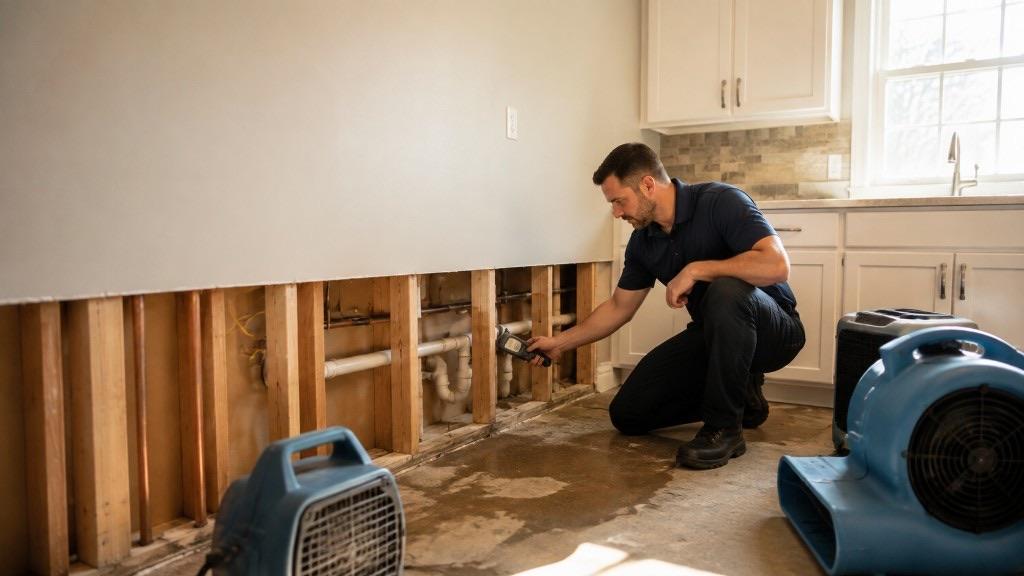
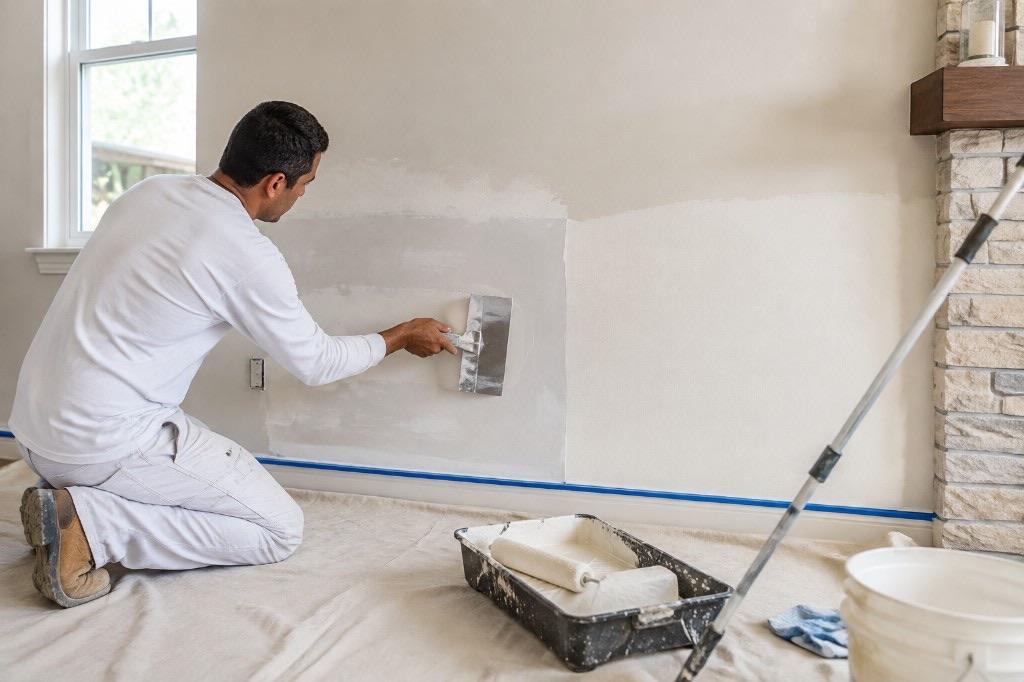
Charlotte's heat and humidity give mold a long season. We find where the moisture comes from, contain the area, remove the growth, and rebuild, whether it is a condo near Uptown or a bungalow in Plaza Midwood.
The kind of building you live in decides where moisture hides. A high-rise condo and a 1950s ranch have almost nothing in common underneath the paint. Pick the description closest to yours.
Uptown and South End
Condos, lofts, and apartment towers
In tall buildings mold usually follows an air-conditioning condensate problem, a leak from the unit above, or a window seal that failed. Because walls and ceilings are shared, growth can be in a space you do not own.
We document the source, coordinate with building management, and keep containment tight so other units are not affected.
Where it shows up
Clogged condensate drains above ceilings
Leaks from the unit above that soaked drywall
Window and balcony door seals that let rain in
Dilworth, Plaza Midwood, Elizabeth
Bungalows and ranches in established neighborhoods
Older Charlotte homes often sit over crawl spaces with dirt floors, vents that were closed years ago, and ductwork that sweats in summer. The musty smell that rises through the floors is usually coming from there.
We dry and clean the crawl space, address the moisture source, and recommend sealing or ventilation that fits the house.
Where it shows up
Damp crawl spaces with bare soil
Insulation sagging against wet subfloor
Sweating ducts dripping onto framing
SouthPark, Ballantyne, University City
Larger newer homes
Big houses with large air conditioners can chill ductwork and attics enough to cause condensation. Bathrooms with weak fans, and roofs and windows with small leaks, add to the load.
We trace each moisture path, remove affected drywall and insulation, and suggest ventilation fixes.
Where it shows up
Attic condensation from poor ventilation
Bathroom ceilings without effective exhaust
Small window and roof leaks behind drywall
Apartments and rental houses
Rental properties and multi-unit buildings
Mold in a rental raises questions for tenants and owners about cause and responsibility. Clear documentation helps everyone understand what happened.
We record the findings in plain language and share them with the people who need them.
Where it shows up
Bathroom mold from poor ventilation
Window condensation in winter
Plumbing leaks inside walls
What we are called for
Where we find mold most often in Charlotte.
Condensation on ducts
Cold ducts sweat in humid summer air and drip onto framing.
Slow plumbing leaks
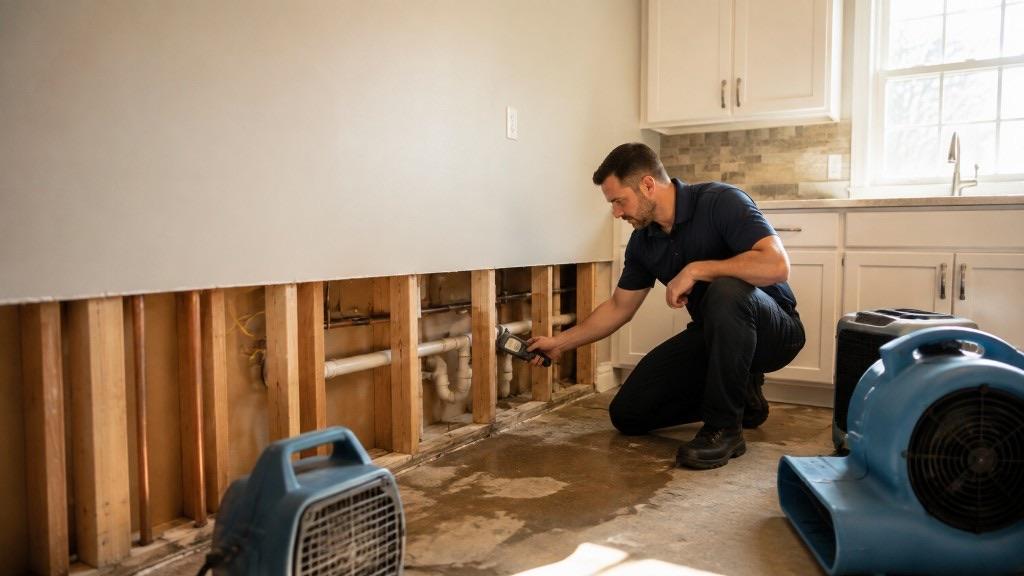
A small drip inside a wall can feed growth for months before a stain appears.
Roof and window leaks
Rain finds small gaps and wets insulation and drywall.
Crawl space moisture
Bare soil and closed vents keep the air under older homes damp.
Bathrooms without exhaust
Showers with weak fans leave ceilings damp and spotted.
Leftover water damage
Water events that were never fully dried can bloom weeks later.
Before anyone disturbs it
Handling mold the safe way in Charlotte.
Disturbing mold sends spores into the air. These habits keep a small problem small.
Do
Stop any active leak or drip you can reach safely.
Run a dehumidifier in the room, with the door closed.
Photograph visible growth and any water stains.
Keep children, pets, and anyone with breathing problems out of the area.
Call us and describe what you see and smell.
Don't
Don't scrub or sand it; that spreads spores.
Don't point a fan at the area.
Don't paint over it; the paint will peel and growth continues.
Don't run the HVAC if the growth is near vents or ducts.
Why it matters here
Charlotte's climate and building stock.
Climate
Long, humid summers keep indoor humidity high without dehumidification.
Heavy afternoon storms can drive rain past weak seals.
Mild winters mean mold is not killed off by cold.
Piedmont clay holds water against foundations after rain.
Buildings
Older houses often have crawl spaces with exposed dirt.
Newer homes are tightly built and can trap moisture.
High-rises depend on condensate drains that clog.
Many homes have attics that get hot and damp at the same time.
How mold removal works
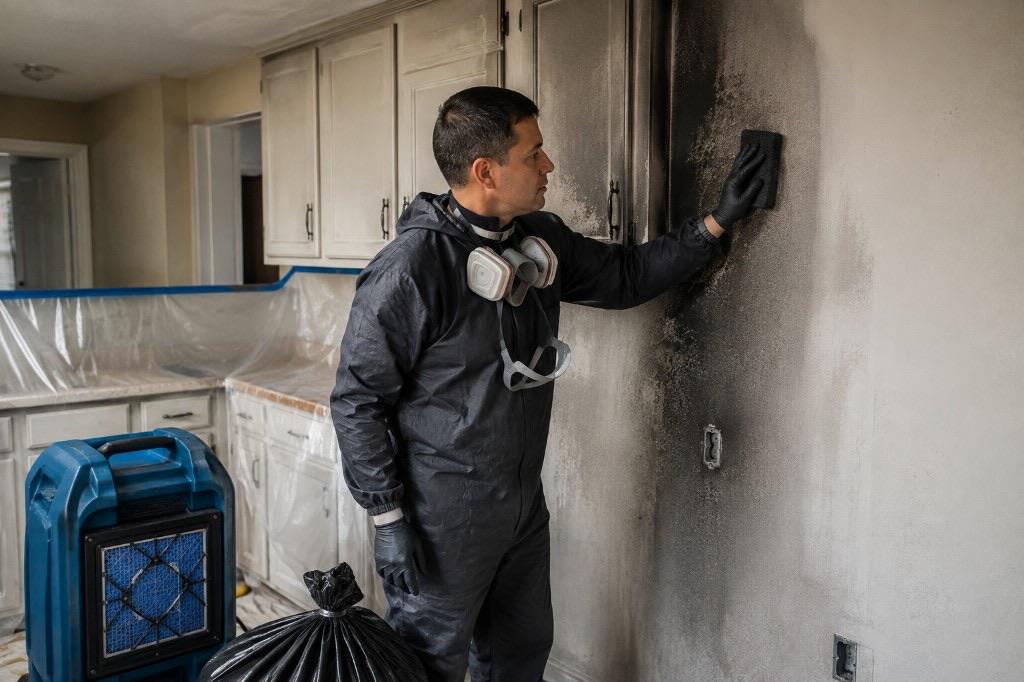
Find the moisture, contain the area, remove the growth.
Yes. We work across Charlotte, including Uptown, South End, NoDa, Plaza Midwood, Dilworth, and Myers Park. Call us for current availability for your address.
Yes. We work in high-rise and multi-unit buildings, keep containment tight, and coordinate with management so neighbors are not affected.
Possibly. Damp crawl spaces commonly grow mold on wood and insulation. We inspect, measure moisture, and tell you what we find.
Tight homes can trap moisture from showers, cooking, and cold ducts. Mold grows where that moisture meets cool surfaces. We find the specific source in your house.
We work across Charlotte, including Uptown, South End, NoDa, Plaza Midwood, Dilworth, SouthPark, Ballantyne, and University City. Call with your address to confirm.
If you rent, yes. The owner or manager usually has to approve work and may have their own contractor or insurer. We can document findings for them either way.
Some people notice little; others react strongly. Because it also damages materials, we suggest dealing with it early.
Not reliably. Bleach may lighten surface stains but does not penetrate drywall or wood, and it does nothing about the moisture that feeds growth.
Inspection comes first. Testing is useful in some cases, and we will tell you when.
It is unlikely when the source is corrected. We explain what to do to prevent it.