We are based in Monroe, so this is home turf. We handle water extraction, structural drying, and repairs across the city and Union County, from historic downtown houses to farms and new subdivisions.
A county seat, a lot of farmland, and growing edges.
Monroe mixes historic neighborhoods near downtown, mid-century houses, new subdivisions on the edges of town, and farm properties beyond. Each has its own water problems.
Older neighborhoods
Downtown Monroe and the historic streets around it
Older houses near downtown have original plumbing, brick, plaster, and crawl spaces. Slow leaks inside walls are common, and the first sign is often a stain, a musty smell, or flooring that starts to cup.
We trace moisture to its source and dry the structure, protecting original finishes where they can be saved.
What we often see
Corroded supply and drain lines in plaster walls
Old roofs and chimney flashing that leak in storms
Damp crawl spaces under wood floors
Brick ranches
Established neighborhoods along N Johnson Street and Roosevelt Boulevard
Mid-century brick ranches and split-levels are solid, but their water heaters, supply lines, and roofs are decades old. Slab foundations hide leaks under flooring.
We find the hidden water, dry the flooring and subfloor, and replace what cannot be saved.
What we often see
Slab leaks that lift or stain flooring
Old water heaters and galvanized lines
Roof leaks that travel across single-level ceilings
Growing edges
Newer neighborhoods toward Indian Trail and the Monroe Expressway
New homes are larger, with upstairs laundry, tight HVAC closets, and bonus rooms. One failed hose or condensate line can soak several rooms before it is found.
We dry each affected level and check the rooms beneath the leak.
What we often see
Washer and dishwasher supply lines
Water heater and HVAC closet leaks
Condensate drains above finished rooms
Larger properties
Farms, large lots, and rural Union County
Rural properties often have wells, septic systems, barns, and long driveways. Runoff, failed pumps, and frozen outdoor lines drive many calls.
We find how the water got in, pump it out, and dry the structure so it does not become a mold problem.
What we often see
Well pump and pressure tank leaks
Frozen outdoor lines splitting in a cold snap
Runoff pooling against foundations and slabs
Right now
Water in the house? Do these things first.
Most of the damage is decided in the first hour. These steps keep it small.
Do
Shut off the main water valve if the source is not obvious.
Turn off power to wet rooms if you can reach the panel from a dry spot.
Photograph the damage before anything is moved.
Check below and next to the leak, including crawl spaces and ceilings.
Call us and tell us what you see.
Don't
Don't wade into standing water near outlets or the panel.
Don't throw out wet materials before they are documented.
Don't wait to see if it dries on its own.
Don't use a household vacuum on water.
What we are called for
The leaks we see most often in Monroe.
Aging pipes in older houses
Galvanized and cast iron lines corrode and leak inside walls and under floors.
Water heater failure
A tank in the garage or closet splits and floods the area.
AC drain line overflow
Condensate backs up into attics and closets in humid months.
Storm water in garages and crawl spaces
Heavy rain enters at thresholds and low points.
Well and pump failures
Pressure tanks and well pumps leak or burst on rural properties.
Roof leaks after a storm
Wind and hail lift shingles, and water follows nails into the ceiling.
Monroe weather
Weather and water in Union County.
Storms and clay
Warm-season thunderstorms bring heavy rain that exposes weak roofs and window seals.
Tropical remnants in late summer and fall can soak Union County for days.
Clay soil drains slowly and holds water against foundations and in crawl spaces.
Low ground near creeks and drainage channels may sit in mapped flood zones.
Heat, humidity, and cold
Humid summers keep air conditioning running and condensate lines clogged.
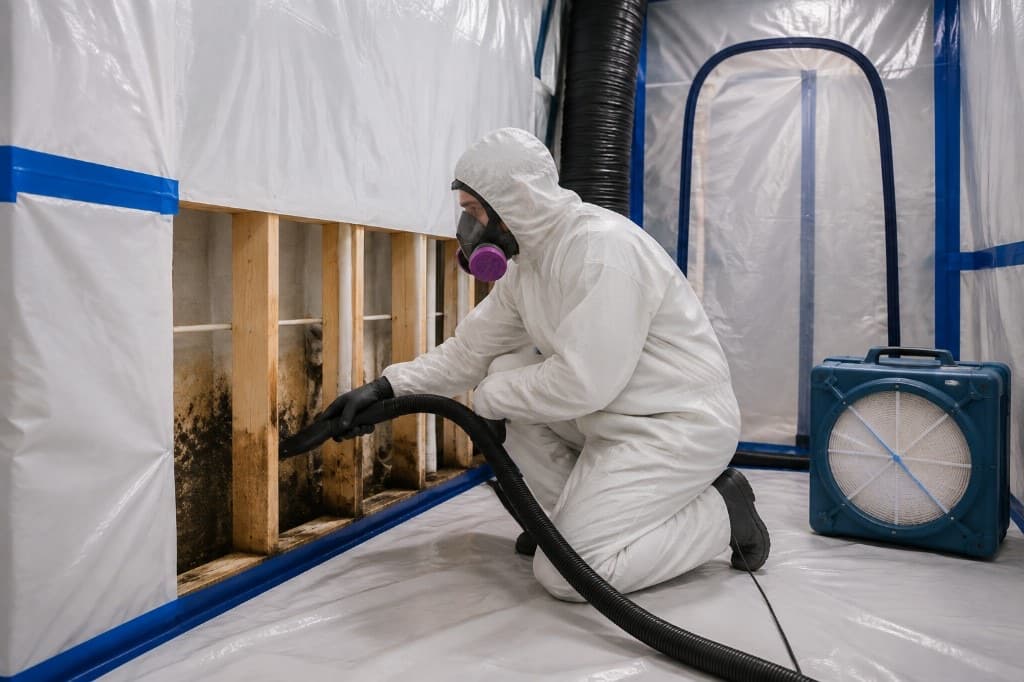
Damp crawl spaces under older houses are a common source of mold.
Hard freezes can split pipes in attics, garages, outdoor spigots, and well lines.
Humid air slows drying, so we measure moisture rather than guess.
Yes. We work across Monroe, including Downtown Monroe, N Johnson Street area, Lake Lee area, Roosevelt Boulevard (US-74), Monroe Expressway corridor, and Highway 601 corridor. Call us for current availability for your address.
Our office is at 600 N Johnson St in Monroe. We serve Monroe and communities across Union County, including Indian Trail, Marshville, Wingate, Waxhaw, and Weddington. Call us for current availability for your address.
Yes. We serve rural Union County. Call with the address and a short description of what happened, and we will tell you what to do while we are on our way.
Yes. We shut off and remove the water, dry the structure, and repair what was damaged. A plumber or well technician may need to repair or replace the equipment itself, and we can coordinate the timing.
Yes. We work carefully in older houses, save original flooring and trim where it is sound, and match finishes when materials must be replaced.
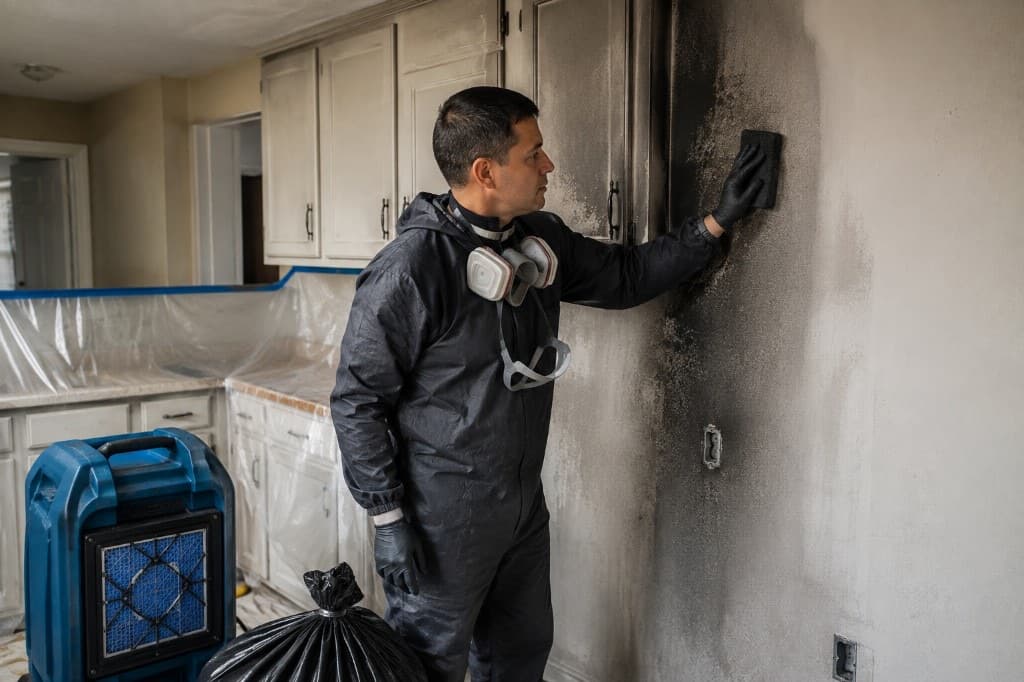
Yes. We handle water, fire, and mold damage and remodeling for homes, shops, and offices.
It depends on your policy and what caused the water. Many policies cover sudden events such as a burst pipe but not long-term seepage, and flood needs separate coverage. Your insurer decides. We provide the documentation.
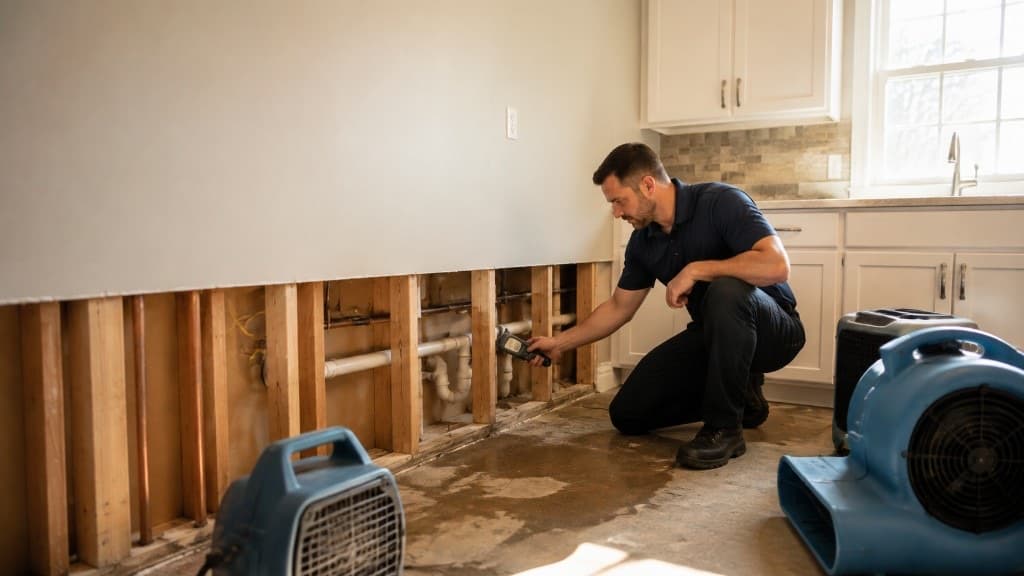
It could be either. Old stains stay visible after a leak ends. A reading with a moisture meter shows whether the material is still wet, and how far the dampness reaches beyond the stain.
Yes. Repairs are part of what we do, so the job does not stop when the equipment leaves.
Water damage, fire damage, and mold restoration, plus remodeling, for homes and businesses across the Charlotte metro. One team from emergency cleanup to the finished repair.