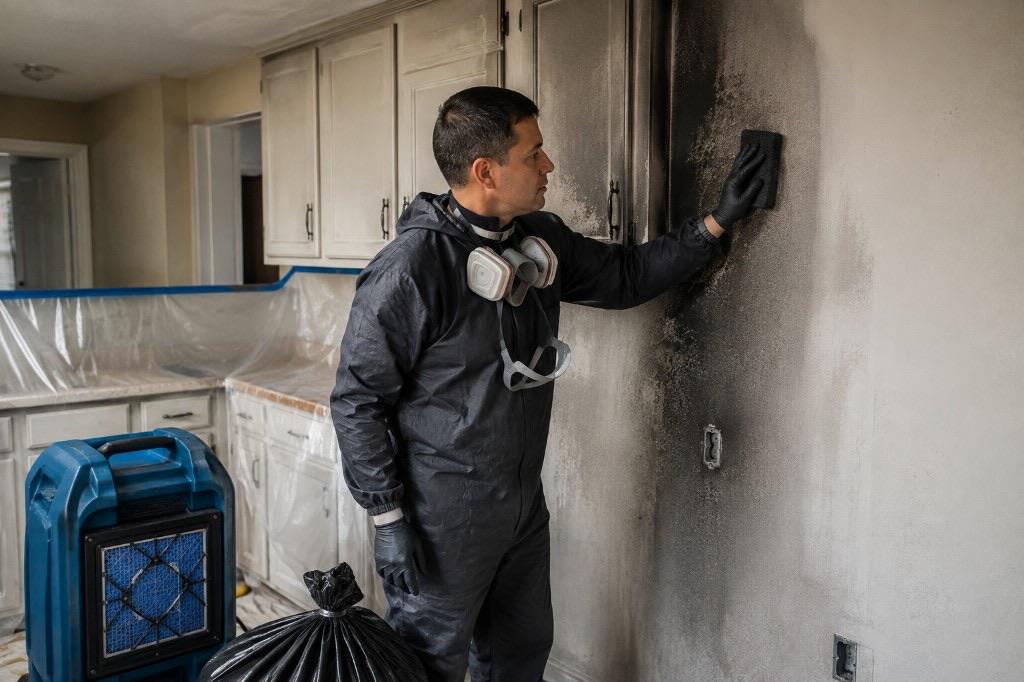
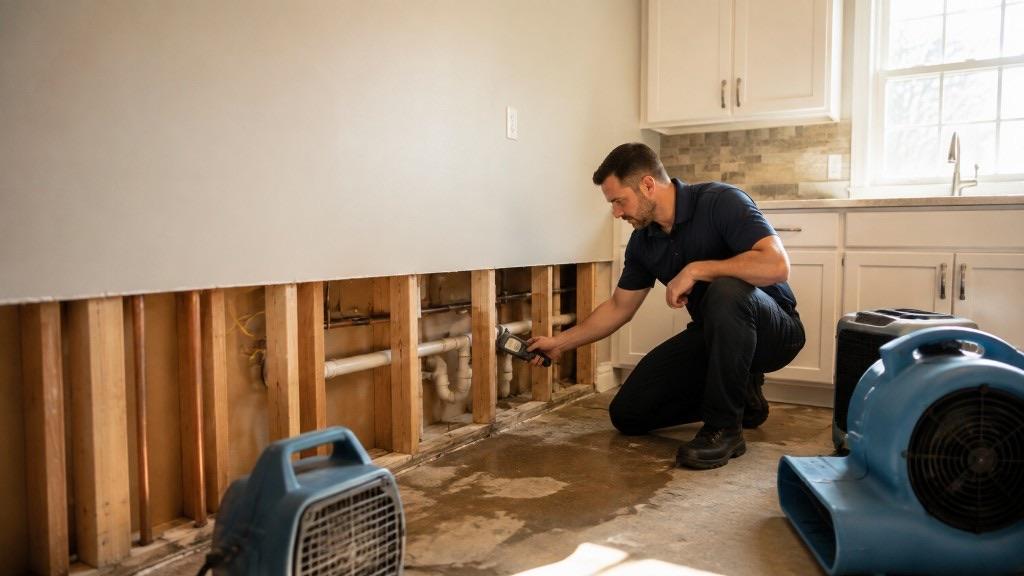
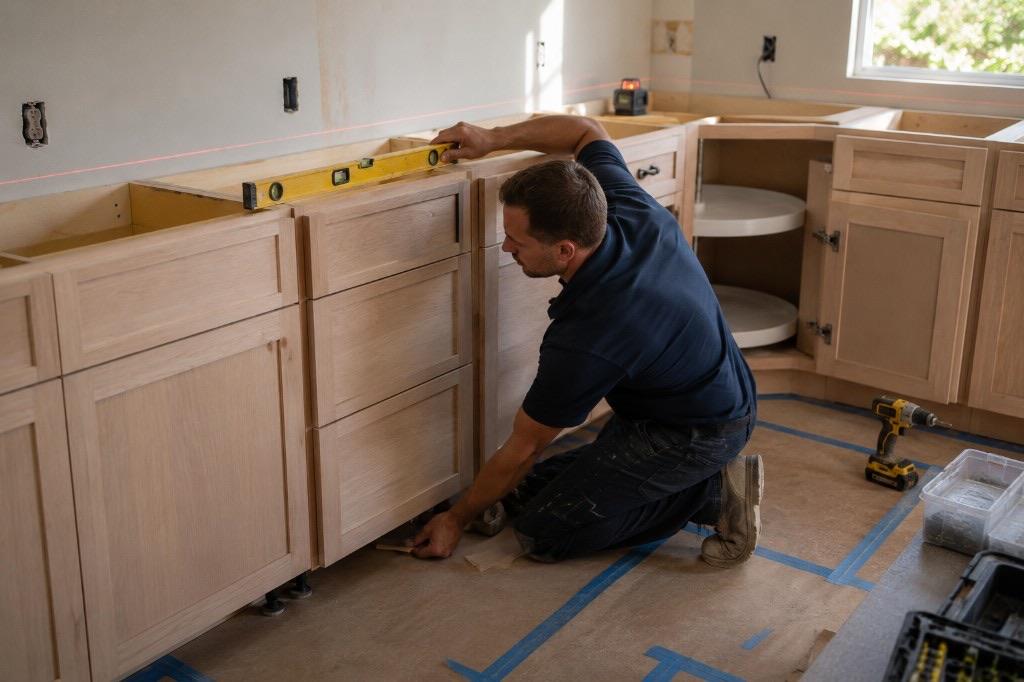
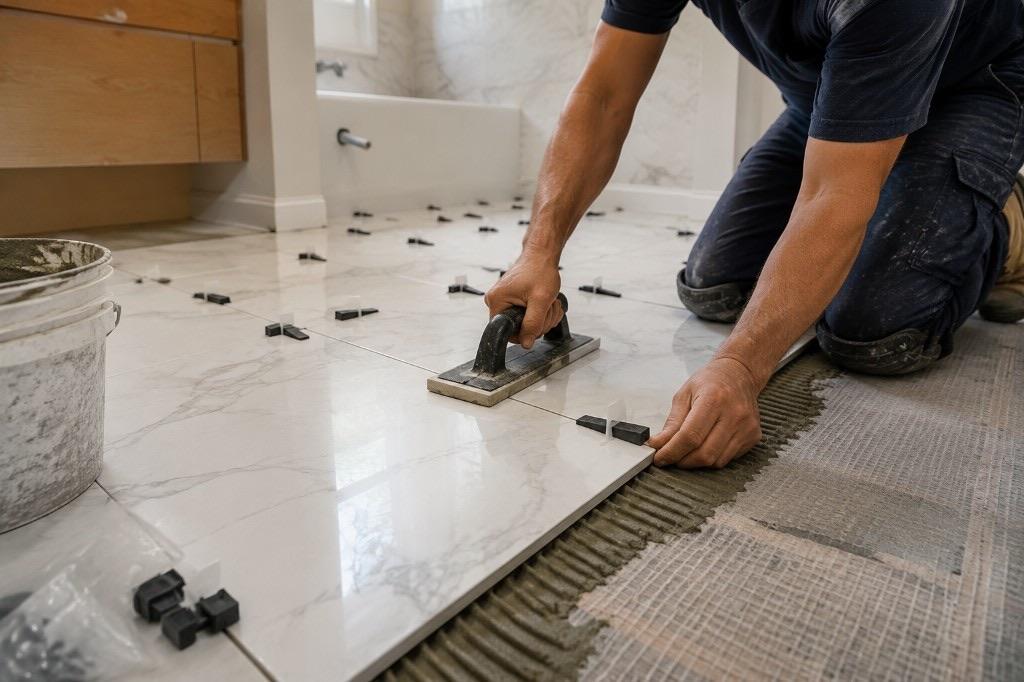
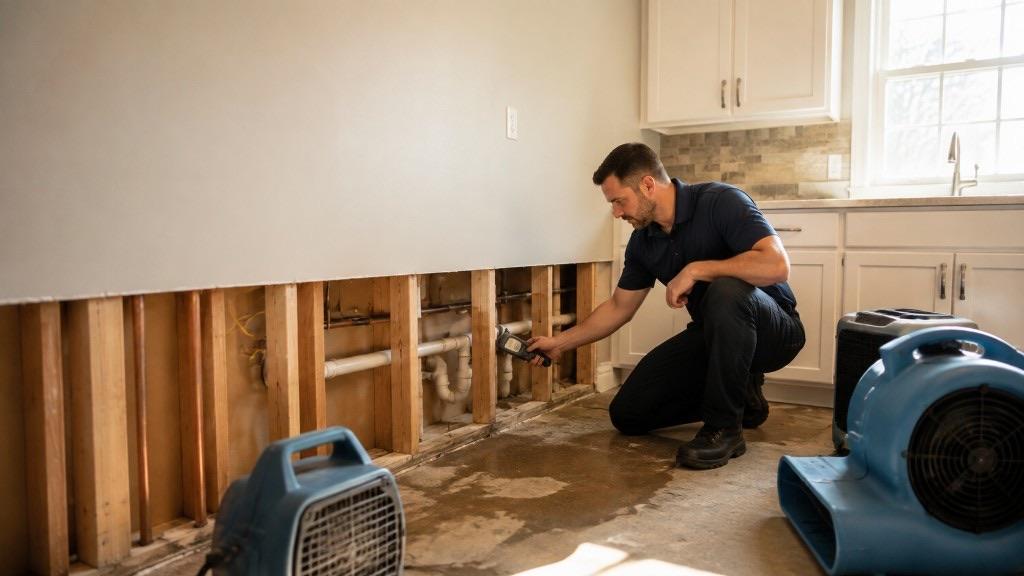
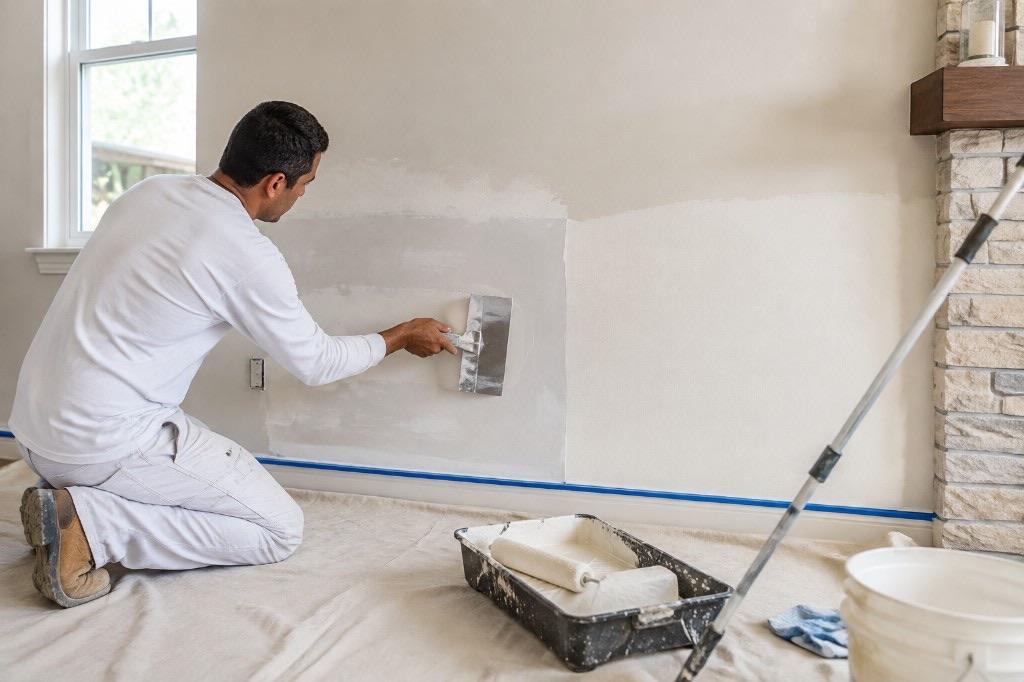
Fort Mill's tightly built planned neighborhoods, lake houses that sit closed for weeks, and older homes near the town center each grow mold for different reasons. We find the moisture behind it, contain the work, remove the growth, and rebuild.
Tight houses, closed-up lake homes, and old crawl spaces.
A house in Baxter Village, a lake home at Tega Cay, and a bungalow near the old downtown almost never get mold in the same spot. Knowing which of those you live in tells us where to look first.
Planned neighborhoods
Baxter Village and similar communities
Homes here were built close together to a common standard: tight envelopes, large air conditioners, and porches that shade windows and walls. That combination holds humidity inside, lets ducts sweat in the attic, and keeps small leaks around windows wet long after the rain stops.
We trace the moisture to its path, remove what it soaked, and recommend ventilation and flashing fixes that fit the way these houses were built.
Where it shows up
Attic ducts that drip condensation onto insulation
Bathroom fans that terminate in the soffit instead of outdoors
Window flashing that leaks behind finished drywall
Lakefront homes
Tega Cay and the Lake Wylie shoreline
Lake air raises indoor humidity all summer, and many houses sit shut for weeks between visits. With no one running showers or opening windows, damp collects in closets, on bathroom ceilings, and in walkout levels cut into the slope, and mold gets a long head start.
We inspect the whole house, treat what has grown, and set up a simple plan to keep humidity down when you are away.
Where it shows up
Closets and bedrooms that smell musty after a long absence
Walkout levels that seep along the slab edge
Boat and equipment rooms with damp walls
Older homes
Houses near downtown Fort Mill
Older homes sit over crawl spaces with limited airflow, and their original windows, porches, and flashing have had decades of weather. Damp air rises through the floor, and rain finds its way past aged seals into walls that rarely dry out.
We dry and clean salvageable framing, replace what cannot be saved, and talk through moisture control suited to an older house.
Where it shows up
Crawl spaces with damp soil and sagging insulation
Porch roofs whose flashing has failed
Original windows that leak around the sash
Apartments and shops
Apartments and retail along Regent Parkway
Apartments and strip centers share roofs, plumbing stacks, and mechanical rooms. A clogged condensate line or a slow roof leak can wet several units before anyone connects the stains, and managers need clear records to deal with tenants and owners.
We document each affected space, contain the work tightly, and coordinate with managers and owners.
Where it shows up
Upstairs units whose leaks reach ceilings below
Condensate lines that back up above suites
Roof drains that overflow onto flat roofs
What we are called for
Where mold shows up around Fort Mill.
Sweating ducts
Cold ducts in a hot attic drip onto insulation and ceilings through the humid months.
Slow hidden leaks
A drip inside a wall can keep framing wet for months before any stain appears.
Window and roof intrusion
Rain gets past flashing and seals and soaks drywall and insulation from inside.
Crawl space moisture
Damp soil under older houses keeps the air below the floor wet most of the year.
Bathrooms
Fans that cannot move enough air leave ceilings and grout damp after every shower.
Closed-up lake houses
Humid air settles in rooms that no one opens for weeks at a time.
While you wait
What to do if you spot mold in Fort Mill.
Mold releases spores when it is disturbed, so the most helpful early steps are quiet ones.
Do
Dry any wet surface you can reach and shut off a leak that is still running.
Close the door to the room and run a dehumidifier inside it.
Photograph the growth, the stains, and the date, for your own records.
Keep children, pets, and anyone with asthma away from the space.
Call us before starting any large cleanup.
Don't
Don't rub, sand, or scrape the growth dry.
Don't point box fans at the area to speed things up.
Don't seal it behind paint or caulk.
Don't leave the air handler running if the mold is by a vent.
Local context
What makes Fort Mill homes prone to mold.
How the homes are built
Tight modern envelopes keep humidity from showers and cooking inside.
Large air conditioners cool quickly but may not run long enough to dry the air.
Attics get hot, and ducts running through them sweat in humid weather.
Lake houses can sit closed for weeks with no one managing humidity.
Weather and soil
Summers are long and humid, and indoor air rarely dries on its own.
Afternoon storms test flashing, windows, and roof edges.
Clay soil drains slowly and keeps moisture near foundations.
Mild winters mean mold is slowed but never really stops.
From first visit to finished repair
Five stages that stop mold and keep it away.
Our mold remediation guide explains testing, containment, and prevention in more detail.
Worried about mold near Fort Mill?
We inspect and explain your options. Call or send a request.
Yes. We work across Fort Mill, including Baxter Village, Downtown Fort Mill, Regent Parkway, Fort Mill Parkway, Highway 160, and Springfield. Call us for current availability for your address.
Tight houses keep humidity in. Showers, cooking, and cold ducts add moisture, and when it meets a cool surface such as a ceiling or duct, mold can start. We find the specific source in your house.
Run a dehumidifier if you can and call us for an inspection. Closed houses often grow mold in closets and on ceilings, and we can set up a plan so humidity stays low while you are away.
Yes. Air from the crawl space rises into living areas. Cleaning and drying it, and controlling the moisture that fed it, often improves the air inside noticeably.
Your lender, insurer, or landlord may have their own requirements. We keep clear records that can be shared with whoever needs them.
Yes. We replace drywall, insulation, and finishes so the room is ready to use again, and we suggest ways to keep the area dry.
Health effects vary by person and by the amount of mold. We do not diagnose, but we do recommend dealing with it promptly.
Bleach does not solve the underlying problem, and on porous materials it does not reach the roots. Mold usually comes back unless the moisture is fixed and the material is removed or properly cleaned.
We start with a thorough inspection. If you need lab testing for a lender, landlord, or insurer, we can work with an independent tester.
Only if the conditions come back. We fix or advise on the moisture issue so the area stays dry.